
Hard Water or Contaminated Water? How to Tell Which Problem Your Home Really Has
Texas water can create more than one problem in the same home. You may see white scale on faucets and spots on dishes. You may also notice chlorine, sediment, or an unusual odor.
These signs do not always point to the same cause.
Hard water usually affects plumbing, appliances, dishes, skin, and hair. Contaminated water may affect taste, odor, appearance, or health. The correct solution depends on the water issue. A water softener, filtration system, and Reverse Osmosis system do different jobs.
Use this guide to identify the likely problem before you choose a treatment system.
Hard Water vs. Contaminated Water
| Sign | Hard water is likely | Contamination or another water quality issue is possible |
|---|---|---|
| White scale on faucets or showerheads | Yes | Not typical |
| Spots on glasses and dishes | Yes | Not typical |
| Soap does not lather well | Yes | Not typical |
| Dry skin or hair | Common | Possible with some water conditions |
| Cloudy, yellow, brown, or gray water | Not typical | Yes |
| Visible sediment or particles | Not typical | Yes |
| Rotten egg, chemical, or fuel-like odor | Not typical | Yes |
| Metallic, bitter, or salty taste | Sometimes | Yes |
| Rust-colored stains | Not usually caused by hardness alone | Iron, manganese, corrosion, or sediment may be involved |
| Stomach illness | Not caused by hardness | Test for possible microbial contamination |
These signs provide a starting point. They do not confirm the cause. Some contaminants have no taste, odor, or visible color. Testing is required when safety is a concern.
What Hard Water Does to Your Home
Hard water contains elevated levels of minerals such as calcium and magnesium. Texas has many mineral-rich water sources, including limestone aquifers. This makes hard water common across the state.
Hard water is usually a household nuisance rather than a health hazard. It can still create ongoing costs and maintenance problems.
Look for these signs:
- White or chalky buildup around faucets.
- Scale on showerheads.
- Spots or cloudy film on dishes.
- Soap scum in tubs and sinks.
- Soap that does not lather easily.
- Dry or tight-feeling skin after bathing.
- Hair that feels dull or coated.
- Stiff laundry.
- Reduced water pressure over time.
- Scale inside water heaters, dishwashers, and coffee makers.
Hard water can also reduce the efficiency of water-using appliances. Scale acts as an insulating layer inside water heaters. The unit may require more energy to heat water.
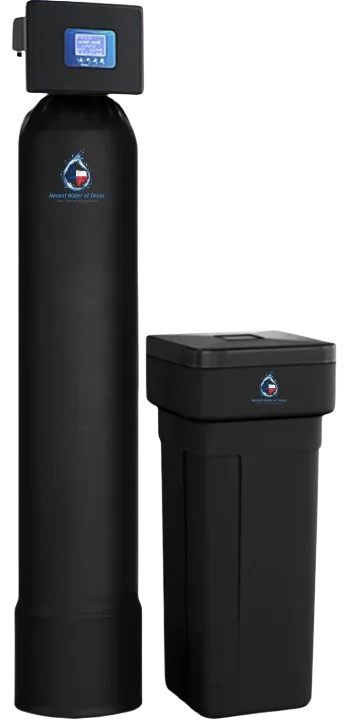
A water softener is designed for this problem. It reduces hardness minerals before they move through your home’s plumbing.
What May Indicate Contaminated Water
Contamination means that unwanted substances are present in the water. These substances may include bacteria, metals, chemicals, fuel-related compounds, nitrate, or other contaminants.
Possible warning signs include:
- A sudden change in taste.
- A new or strong odor.
- Brown, yellow, black, or cloudy water.
- Visible particles or grit.
- An oily sheen.
- Rust or black staining.
- Water that changes after flooding or plumbing work.
- Recurring stomach-related illness among people who drink the water.
Some odors have more than one possible cause. A rotten egg smell may come from hydrogen sulfide in groundwater. It may also come from the water heater if the odor is present only in hot water.
A chlorine smell may come from municipal disinfection. A metallic taste may result from metals, pipe corrosion, or water chemistry.
Do not use smell or taste as a safety test. Lead, nitrate, PFAS, arsenic, and some bacteria may not change the appearance, taste, or odor of water.
The U.S. Environmental Protection Agency’s private well guidance explains that private well owners are responsible for monitoring the safety of their household water. Public water customers should review their utility’s annual water quality report.
Simple At-Home Checks
Start with a basic inspection. Record what you see instead of relying on memory.
Check your fixtures
Inspect faucets, showerheads, drains, and toilet tanks.
- White crust usually points to mineral scale.
- Orange or reddish stains may point to iron.
- Black staining may involve manganese, hydrogen sulfide, or other water chemistry issues.
- Green or blue staining may indicate corrosion.
Check your dishes
Wash a clear glass and allow it to air-dry.
- White spots or a cloudy film often point to hardness.
- A strong odor may point to chlorine or another water quality issue.
- Oily residue requires further investigation.
Check cold and hot water separately
Fill two clean glasses. Use cold water in one and hot water in the other.
If the odor is present only in hot water, the water heater may be involved. If the odor is present in both, test the source water and inspect the plumbing.
Let cloudy water stand
Fill a clear glass and wait several minutes.
If the water clears from the bottom upward, trapped air may be the cause. If particles settle at the bottom, sediment may be present. If the color remains, include color and turbidity in a water test.
Check how soap performs
Use the same amount of soap in hard and soft water if possible. Poor lather, soap scum, and a slippery or coated feeling may indicate hardness.
These checks can help identify patterns. They cannot replace a laboratory analysis.
When to Get a Professional Water Test
Get a professional or certified laboratory test when:
- You use a private well.
- The water has changed color, taste, or odor.
- You see sediment or an oily sheen.
- Your well, pump, or plumbing was recently serviced.
- The property experienced flooding.
- Anyone has recurring stomach-related symptoms after drinking the water.
- You live in an older home with possible lead plumbing.
- You are buying a home.
- You need to test for a specific contaminant.
- You are choosing between a softener, filtration system, and Reverse Osmosis.
Texas A&M AgriLife’s Texas Well Owner Network guide recommends testing private well water for factors such as hardness, pH, nitrate, bacteria, iron, manganese, and total dissolved solids. Additional testing may be needed based on your location and concerns.
Use test strips only for basic screening. Select a laboratory that provides proper sample containers and instructions. Follow the collection instructions exactly.
If bacteria or another health-related contaminant is suspected, do not rely on an ordinary home test or install a system without confirming what is present. Ask a qualified water professional or certified laboratory for direction.
Choose the Treatment That Matches the Problem
Choose a water softener for hardness
A water softener is the primary solution when your main issues are:
- Scale.
- White spots.
- Soap scum.
- Poor soap lather.
- Dry-feeling skin and hair.
- Appliance scale.
- Hard water damage to plumbing.
A softener does not remove every contaminant. It is not a substitute for filtration, disinfection, or a drinking water system.
Learn more about water softeners from Honest Water of Texas.
Choose filtration for taste, odor, and sediment
A filtration system may be appropriate when testing or observation indicates:
- Chlorine taste or odor.
- Sediment.
- Sand or rust particles.
- Certain iron or manganese issues.
- Unwanted taste from organic compounds.
- Whole-house water quality concerns.
The filter media must match the issue. A sediment filter does not remove dissolved chemicals. Carbon filtration can improve certain tastes and odors, but it does not remove every contaminant.
The IntelliClear 600 is listed by Honest Water of Texas with a 10,000-gallon filter life, while the ProLine Plus is described as a low-maintenance filtration option. Confirm the system’s intended contaminants and replacement schedule before installation.
Choose Reverse Osmosis for drinking and cooking water
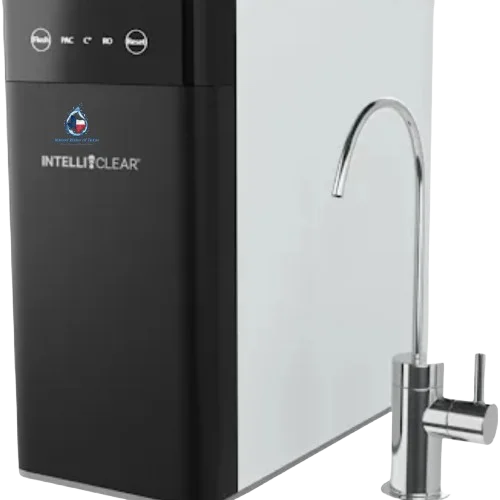
Reverse Osmosis is usually installed at a kitchen sink. It forces water through a semi-permeable membrane to reduce many dissolved solids and selected contaminants.
RO may fit your home if:
- You want lower-TDS drinking water.
- Your water tastes salty, bitter, or metallic.
- Testing identifies dissolved contaminants.
- You want a dedicated source for drinking and cooking.
- You use a softener but want additional treatment at the kitchen faucet.
RO systems require filter and membrane maintenance. The system must be selected for the contaminants found in your water. It is not automatically the correct solution for bacteria, sediment, or every chemical.
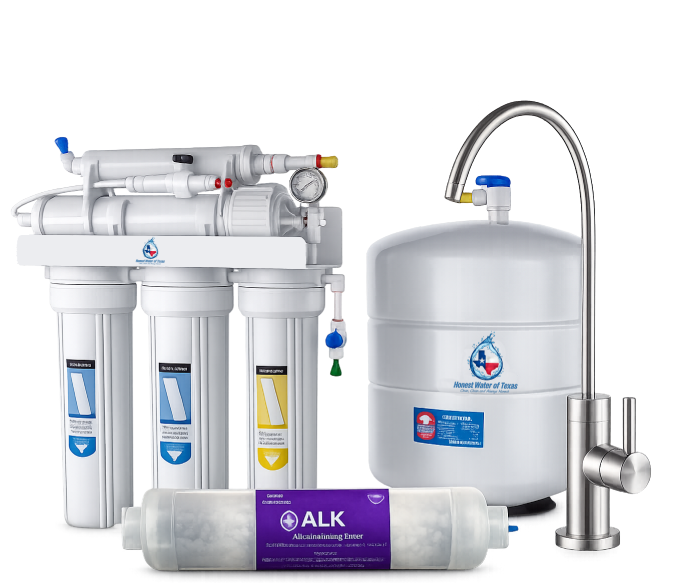
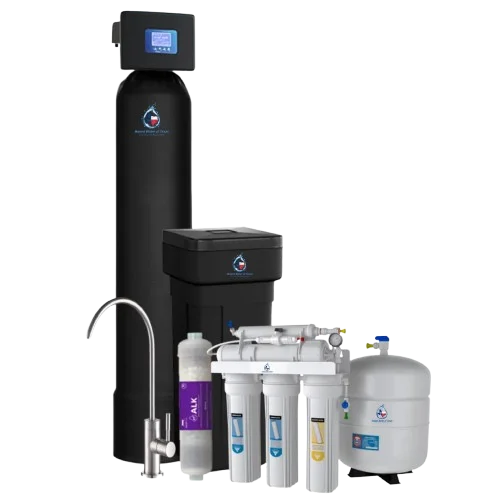
Some homes need more than one treatment method. A common configuration uses a water softener for whole-house scale control, filtration for taste and sediment, and Reverse Osmosis for drinking water.
A Practical Next Step
Follow this sequence:
- List the signs you see. Record scale, spots, odor, color, sediment, and taste.
- Check cold and hot water separately.
- Review your city water report or gather your private well records.
- Get a basic water test.
- Order a professional laboratory test if the water changed or health concerns exist.
- Match the system to the test results.
- Schedule maintenance according to the manufacturer’s requirements.
Do not buy a system based only on a single symptom. Hard water and contamination can occur together. A softener may solve scale while leaving taste or dissolved contaminants unchanged. A filter may improve odor while leaving hardness in the plumbing.
Honest Water of Texas provides water assessments, water softeners, filtration systems, and Reverse Osmosis solutions. Visit https://hwotx.com or contact Honest Water of Texas to discuss your water concerns. Ask for a straightforward assessment. Choose the equipment that fits your water, home, and budget.