
Does Reverse Osmosis Waste Water? The Honest Math Texas Homeowners Need
Reverse osmosis uses water to produce purified water. Some of that water goes to the drain.
That is the honest answer.
The better question is how much water a reverse osmosis system uses, what that water costs, and whether a more efficient system is a better fit for your home.
For most Texas homeowners, the answer is manageable. Reverse osmosis still provides a practical way to improve drinking and cooking water. However, you should understand the numbers before you choose a system.
How Reverse Osmosis Water Use Works
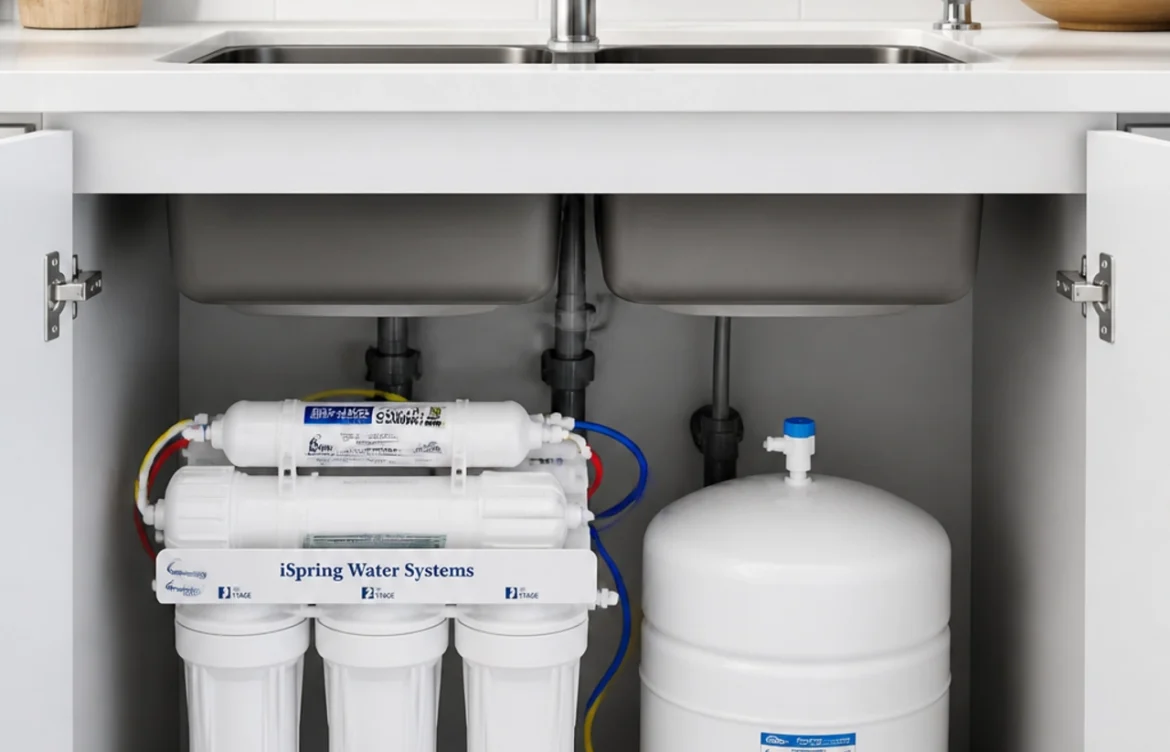
A reverse osmosis system sends water through several stages. Sediment and carbon filters handle larger particles, chlorine, and other substances. The RO membrane then separates purified water from concentrated reject water.
- Permeate: The purified water sent to your storage tank and faucet.
- Reject water: The water carrying concentrated minerals and other filtered substances to the drain.
- Recovery rate: The percentage of incoming water that becomes purified water.
For example, a system with a 25% recovery rate produces:
- 1 gallon of purified water
- 3 gallons of reject water
- 4 gallons of total water used
That is called a 3:1 waste-to-product ratio.
The reject water is not the same as sewage. It usually contains more concentrated minerals than the incoming water. Do not use it for drinking or cooking. You may be able to reuse it for toilet flushing, cleaning, or some outdoor uses. Check local restrictions and avoid using it on plants that are sensitive to minerals or salt.
The Typical Water Waste Numbers
System performance varies. Incoming water pressure, temperature, hardness, TDS, membrane condition, and filter maintenance all affect the result.
Use these figures as planning estimates.
| System type | Approximate recovery | Reject water per gallon of purified water |
|---|---|---|
| Older or low-efficiency residential RO | About 15% | About 5 to 6 gallons |
| Common standard residential RO | About 20% to 25% | About 3 to 4 gallons |
| WaterSense-labeled residential RO | At least 30% | About 2.3 gallons |
| Higher-efficiency system with pump | About 40% to 50% | About 1 to 1.5 gallons |
The EPA WaterSense specification for reverse osmosis systems uses 30% efficiency as its minimum standard for labeled point-of-use systems. That equals about 2.3 gallons of reject water for every gallon of treated water.
Some systems perform better than that. Do not assume they all do. Ask for the tested recovery rate and waste-to-product ratio for the exact model being installed.

The Honest Math for a Texas Household
Assume your household uses 3 gallons of RO water per day for:
- Drinking
- Coffee and tea
- Cooking
- Filling reusable bottles
That equals 1,095 gallons of purified water per year.
Standard system with a 3:1 ratio
A 3:1 system uses:
- 3 gallons of purified water per day
- 9 gallons of reject water per day
- 12 gallons of total incoming water per day
Annual totals:
- 1,095 gallons of purified water
- 3,285 gallons of reject water
- 4,380 gallons of total water used
WaterSense-level system with a 2.3:1 ratio
A 2.3:1 system uses:
- 3 gallons of purified water per day
- 6.9 gallons of reject water per day
- 9.9 gallons of total incoming water per day
Annual totals:
- 1,095 gallons of purified water
- 2,519 gallons of reject water
- 3,614 gallons of total water used
The more efficient system saves about 766 gallons of reject water per year compared with the 3:1 system.
Higher-efficiency system with a 1:1 ratio
A 1:1 system uses:
- 3 gallons of purified water per day
- 3 gallons of reject water per day
- 6 gallons of total incoming water per day
Annual totals:
- 1,095 gallons of purified water
- 1,095 gallons of reject water
- 2,190 gallons of total water used
Your actual use may be higher or lower. A household that drinks and cooks with 5 gallons of RO water per day will produce more purified water and more reject water.
What Does the Reject Water Cost?
Your water rate depends on your city, utility, usage tier, and service fees.
For a simple example, use a water rate of $5 per 1,000 gallons. This example covers the water charge only. It does not include wastewater, fixed fees, taxes, or other utility charges.
Annual reject-water cost at $5 per 1,000 gallons
| Waste-to-product ratio | Annual reject water for 3 gallons/day of RO use | Approximate water-only cost |
|---|---|---|
| 5.7:1 | 6,242 gallons | $31.21 |
| 3:1 | 3,285 gallons | $16.43 |
| 2.3:1 | 2,519 gallons | $12.59 |
| 1:1 | 1,095 gallons | $5.48 |
These are not universal Texas prices. They show the scale of the expense.
For another reference point, Austin Water lists a 2025–2026 inside-city residential water rate of $3.27 per 1,000 gallons for the first usage tier. At that rate, 3,285 gallons of annual reject water would cost about $10.74 in water charges.
Review the current Austin Water rates and fees or your local utility bill before making your own calculation.
Could Wastewater Charges Increase the Cost?
Possibly.
Some utilities charge wastewater based on metered water use. Others use winter averages, caps, or separate billing rules. Some water providers charge a combined rate that includes water, wastewater, and other fees.
This means the cost of RO reject water may be higher than the water-only examples above.
Check your bill for these items:
- Water charge per 1,000 gallons.
- Wastewater charge per 1,000 gallons.
- Fixed monthly service fees.
- Seasonal or winter-average billing rules.
- Any local water-use restrictions.
Do not estimate your cost from a national average. Use your own utility rate.
How High-Efficiency RO Systems Reduce Waste
High-efficiency systems reduce waste through system design and operating conditions.
Use a permeate pump
A permeate pump uses the energy in the reject-water stream to help move purified water into the storage tank. This reduces back pressure on the membrane and can improve recovery.
Depending on the system and water conditions, a permeate pump may reduce a 3:1 or 4:1 ratio to approximately 1.5:1 or 2:1.
Use a booster pump when needed
Low incoming pressure can reduce RO performance. A booster pump can help the membrane operate at the pressure it needs.
Higher pressure may improve production and recovery. The pump also uses electricity, so ask about its energy use and expected performance.
Maintain the prefilters
Clogged prefilters reduce flow and pressure. This can cause the system to run longer and perform less efficiently.
Replace filters according to the manufacturer’s schedule. Inspect the reject line if production changes. A sudden increase in drain flow or a decrease in purified-water production may indicate a maintenance issue.
Treat hard water before the RO membrane
Texas water can contain significant amounts of calcium and magnesium. Hard water can create scale on the RO membrane.
A water softener can reduce this problem before water reaches the RO system. A softener and RO system do different jobs:
- A softener protects plumbing, appliances, and the RO membrane from hardness.
- An RO system provides highly purified drinking and cooking water at a dedicated faucet.
Read our guide to water purification systems versus reverse osmosis before choosing between whole-home treatment and point-of-use RO.

Is Reverse Osmosis Still Worth It?
For most Texas homes, yes.
RO is a point-of-use system. It does not treat every shower, toilet, or outdoor faucet. It focuses on the water you drink and use for cooking.
The reject water is a real tradeoff. You should not ignore it. You should also compare it with the alternatives:
- Buying bottled water creates recurring costs.
- Bottled water uses single-use plastic and requires storage.
- Pitcher filters do not remove every contaminant.
- Whole-home filtration may not provide the same level of dissolved-solids reduction at the kitchen faucet.
- A properly selected RO system provides purified water on demand.
The extra water cost is often modest when the system is sized for normal household use. High-efficiency equipment can reduce the amount further.
What to Ask Before You Buy
Ask these questions before selecting a water purification system:
- What is the tested recovery rate?
- What is the waste-to-product ratio?
- Is the rating based on actual operating conditions?
- What water pressure does the system require?
- Does it include a permeate or booster pump?
- Does your home need a water softener before RO?
- Which contaminants is the system certified to reduce?
- What filter and membrane replacements are required?
- Can reject water be reused safely for a non-potable purpose?
- What will maintenance cost each year?
Do not choose a system based only on a “1:1” claim. Ask how that number was measured and whether it applies to your water pressure, temperature, TDS, and daily usage.
Get an Honest Recommendation
Reverse osmosis does produce reject water. Standard systems may send 3 to 6 gallons to the drain for every gallon of purified water. WaterSense-labeled and higher-efficiency systems can reduce that amount.
The right choice depends on your water quality, household usage, available pressure, budget, and priorities.
Honest Water of Texas provides water assessments without high-pressure sales tactics. We can help you compare a water softener, whole-home filtration system, and reverse osmosis system based on your home’s needs.
Review our water system services or contact Honest Water of Texas to discuss your options.