
Water Purification System Vs. Reverse Osmosis: Which Is Better For Your Family?
Texas homeowners frequently encounter water quality issues. Hard water minerals and chemical additives like chlorine affect daily life. Selecting the correct treatment technology is necessary to resolve these problems. You must choose between a whole-home water purification system and a dedicated reverse osmosis system. This guide provides a functional comparison to assist your decision.
Understanding Whole-Home Water Purification Systems
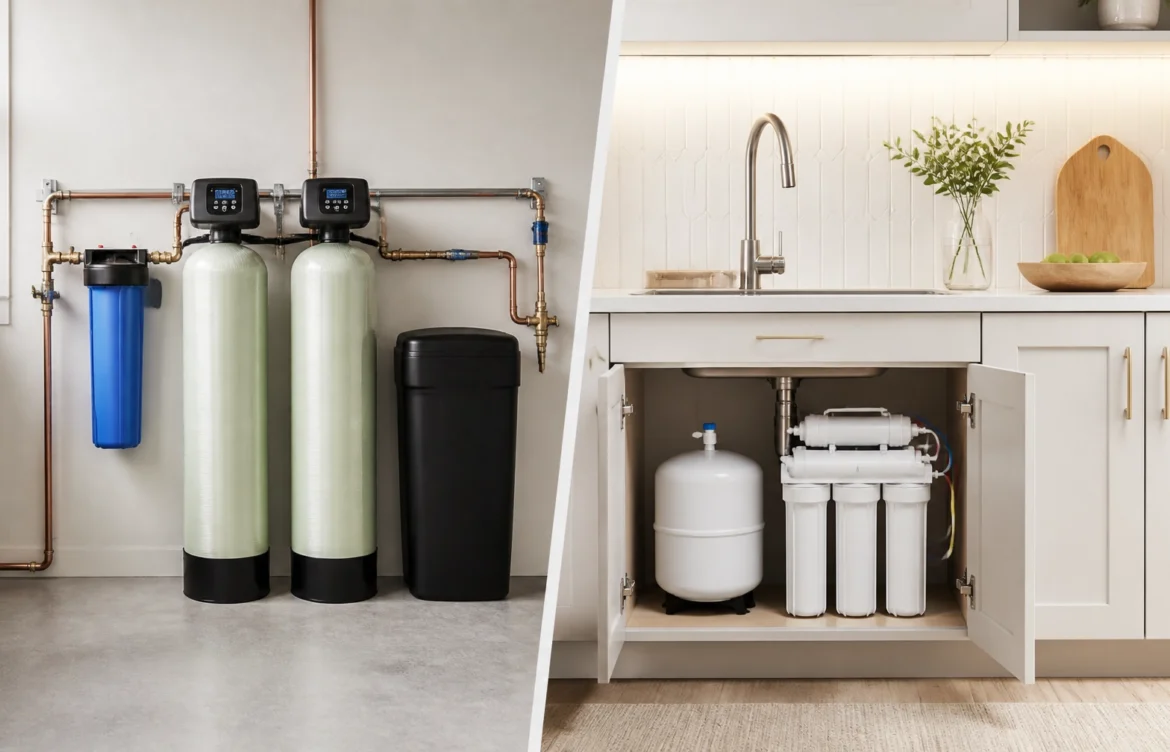
A whole-home water purification system is a Point-of-Entry (POE) solution. It is installed at the main water line where water enters your residence. This placement ensures that every tap, showerhead, and appliance receives treated water.
Functional Benefits of Whole-Home Systems
Whole-home systems focus on general water quality and infrastructure protection.
- Appliance Protection: These systems reduce scale buildup in water heaters, dishwashers, and washing machines. This action extends the lifespan of your household equipment.
- Skin and Hair Health: Removing chlorine and hard minerals prevents the drying effects typically experienced during showers. Visit our page on water softeners and dry skin to learn more.
- Plumbing Preservation: Reduced mineral accumulation prevents pipe corrosion and clogging over time.
- Unified Solution: One installation treats the entire house, including laundry and outdoor faucets if required.
Product Options for Texas Homes
At Honest Water of Texas, we offer several whole-home solutions. The ProLine Plus is a maintenance-free system designed for long-term reliability. The Hydro Spring provides high-performance softening for homes with extreme hardness levels. For those seeking comprehensive filtration, the IntelliClear 600 offers a 10,000-gallon filter life.

Understanding Reverse Osmosis Systems
Reverse osmosis (RO) is a Point-of-Use (POU) technology. It is typically installed under the kitchen sink. This system uses a semipermeable membrane to remove up to 99% of dissolved solids and contaminants from your drinking water.
Functional Benefits of Reverse Osmosis
RO systems prioritize the highest possible purity for consumption.
- Contaminant Removal: These units effectively remove lead, arsenic, nitrates, and PFAS.
- Improved Taste: By stripping away minerals and chemicals, RO produces water that is often compared to premium bottled water.
- Cooking Quality: Pure water improves the flavor of coffee, tea, and home-cooked meals.
- Monitoring Features: Modern RO units, such as our Alkaline Filter, include real-time TDS (Total Dissolved Solids) displays to monitor water quality instantly.
The RO Installation Process
An RO system requires a dedicated faucet on your countertop. It also uses a small storage tank to ensure water is available on demand. While it produces the highest quality drinking water, it does not protect your showers or appliances because it only treats one specific tap.

Key Differences: Side-by-Side Comparison
Review the following table to understand the primary differences between these two technologies.
| Feature | Whole-Home Purification | Reverse Osmosis (RO) |
|---|---|---|
| Installation Point | Main water line (Point-of-Entry) | Kitchen sink (Point-of-Use) |
| Water Coverage | Entire home (Showers, laundry, etc.) | One dedicated drinking faucet |
| Primary Goal | Protect pipes, appliances, and skin | Provide high-purity drinking water |
| Filtration Level | Removes chlorine, sediment, and minerals | Removes 99% of all dissolved solids |
| Wastewater | Minimal to none | Generates reject water during process |
| Maintenance | Periodic filter changes or salt refills | Annual filter and membrane replacement |
Choosing the Right System for Your Household
Your choice depends on your specific goals and budget. Use the following criteria to evaluate your needs.
Choose a Whole-Home System If:
- Your primary concern is hard water buildup on fixtures and glass.
- You want to stop buying lotions for dry skin and hair caused by chlorine.
- You wish to protect your expensive home appliances from scale damage.
- You want filtered water from every tap in the house.
- You prefer a maintenance-free or low-maintenance solution like the ProLine Plus.
Choose Reverse Osmosis If:
- Your primary concern is the safety and taste of your drinking water.
- You want to eliminate the cost and waste of plastic water bottles.
- You are concerned about specific contaminants like lead or nitrates.
- You want a dedicated system that displays real-time purity data.
The Combined Approach
Many Texas families choose to install both systems. A whole-home system treats the water for the entire structure, while an RO system provides ultra-purified water at the kitchen sink. This configuration offers complete protection and the highest quality drinking water. You can find more information about these water system services on our website.

Technical Considerations for Texas Homeowners
Texas water is notoriously hard. Municipalities often use high levels of chlorine or chloramines to disinfect water during its journey through aging infrastructure.
Flow Rate and Pressure
Whole-home systems are designed to maintain high flow rates. This ensures that you can run multiple showers and the dishwasher simultaneously without a drop in pressure. In contrast, RO systems produce water slowly and rely on a storage tank. Using an RO system for a shower is not technically feasible or efficient.
Water Waste
Reverse osmosis systems produce "reject water" which carries away the concentrated contaminants. Older systems were inefficient, but modern units provided by Honest Water of Texas are designed for improved efficiency. Whole-home filtration systems typically do not waste water unless they are a backwashing style used for specific iron or sulfur removal.
Honest Assessments and Straightforward Pricing
Choosing a water system should not involve high-pressure sales tactics. At Honest Water of Texas, we provide clear information so you can make an informed decision for your family. We have served the Texas community for over 20 years as a family-owned business.
Our process involves:
- Assessment: We evaluate your home's water quality and plumbing needs.
- Recommendation: We suggest a system that fits your specific budget and goals.
- Installation: Professional technicians install the equipment correctly.
- Support: We provide ongoing service to ensure your system continues to function optimally.
Review our about us page to understand our commitment to honest service.

Conclusion
A whole-home water purification system protects your home's infrastructure and your physical health during hygiene routines. A reverse osmosis system provides the highest standard of water for ingestion. Deciding between them requires identifying if your priority is infrastructure protection or drinking water purity.
Comments