Boil Water Notices Are Hitting Texas Towns : Here’s What to Do Beyond Boiling
Texas homeowners are seeing more boil water notices this year.
In early September 2026, notices were issued or reported in several communities, including:
- Vernon on September 2
- Payne Springs on September 1
- San Augustine Rural Water System on September 4
- Gilmer on September 5
- Marlin on September 7
- Childress on September 8
- Beckville on September 8
This follows notices reported in Jourdanton, Jonestown, and Bastrop County in August.
A boil water notice does not always mean the same problem occurred. It may follow low water pressure, a main break, a power issue, equipment failure, flooding, or a concern about microbial contamination. The required response is the same: follow the instructions from your water provider or local health authority.
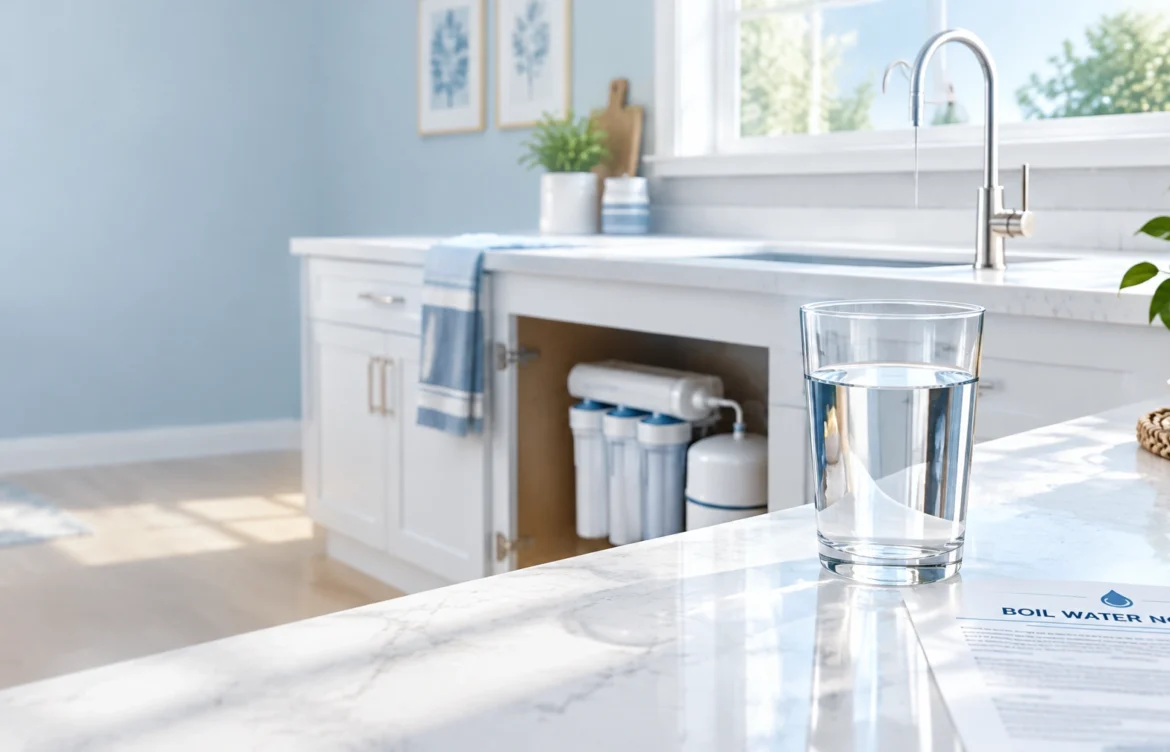
A Water Purification System can improve your daily water quality. A Reverse Osmosis system can provide purified drinking water at your kitchen faucet. Neither system replaces the official instructions during an active boil water notice.
First, confirm the notice for your address
Boil water notices can apply to one street, one subdivision, a rural water system, or an entire town.
Check these sources:
- Visit your city or water provider’s website.
- Check local emergency alerts.
- Review messages from your utility or municipal water district.
- Call the phone number on your water bill.
- Check local news if the notice is connected to a major outage or storm.
Read the notice carefully. Confirm the affected area, the date issued, the reason for the notice, and the instructions for lifting it.
The Texas Commission on Environmental Quality guidance explains that a boil water notice means water may be unsafe for consumption. Continue following the notice until your water system issues an official rescind or lift notice.
During an active notice, boil or replace water
Use bottled water or properly boiled water for:
- Drinking
- Making coffee, tea, lemonade, and other beverages
- Cooking food
- Preparing baby formula
- Brushing your teeth
- Washing fruits and vegetables
- Making ice
- Rinsing food preparation surfaces
- Giving water to pets
Do not assume that clear water is safe. Do not rely on taste or smell. Contaminated water may look and smell normal.
Boil water correctly
Follow the instructions from your provider. TCEQ guidance generally calls for a vigorous rolling boil for two minutes.
Use this process:
- Fill a clean pot with water.
- Heat the water until bubbles rise continuously from the bottom to the top.
- Keep the water at a rolling boil for two minutes.
- Turn off the heat.
- Let the water cool.
- Store it in a clean container with a cover.
Use bottled water when boiling is not practical. Keep enough drinking water available for your household, children, pets, and basic food preparation.

Do more than boil
Boiling addresses immediate consumption needs. You also need to manage other parts of your home routine.
Replace ice
Do not use ice made from tap water after the notice began. Empty ice trays and ice makers. Throw away the existing ice.
Clean the ice maker or dispenser according to the manufacturer’s instructions after the notice is lifted. Make new ice only after your provider confirms that normal water use may resume.
Brush your teeth with safe water
Use bottled or boiled and cooled water. This includes water used to rinse your toothbrush or mouth.
Keep a bottle near the bathroom sink. This reduces the chance that someone will use untreated tap water out of habit.
Prepare baby formula carefully
Use ready-to-use formula when possible. If you use powdered or concentrated formula, prepare it with bottled water or boiled water that has cooled.
Wash and sterilize bottles, nipples, and other feeding supplies. Follow guidance from your healthcare provider if your child is very young or medically vulnerable.
Wash dishes safely
Follow the instructions in your local notice. TCEQ states that a household dishwasher is generally safe when the final rinse reaches at least 150 degrees Fahrenheit or the sanitizing cycle is used.
For handwashing:
- Wash and rinse dishes with hot water and detergent.
- Add one teaspoon of unscented household liquid bleach to each gallon of warm water in a separate basin.
- Soak the rinsed dishes for at least one minute.
- Let the dishes air dry completely.
Never mix bleach with other cleaning products.
Use caution when bathing
You can often shower or bathe during a boil water notice. Avoid swallowing the water.
Use extra caution with babies and young children. Consider sponge baths if it is difficult to prevent them from getting water in their mouths. Follow stricter instructions if your local provider issues them.
Keep laundry routine
Laundry can generally be done as usual. Use safe water for any activity involving drinking, cooking, brushing teeth, or contact with the mouth.
Give pets safe water
Pets can be affected by some of the same waterborne organisms as people. Use bottled or boiled and cooled water for drinking.
Do not assume your filter makes tap water safe
This point matters.
Most household filters do not remove bacteria or viruses. A refrigerator filter, pitcher filter, faucet filter, or whole-home carbon filter should not be treated as a substitute for boiling during an active notice.
TCEQ also advises customers to boil tap water even when it has passed through a home filter. The same guidance applies to many point-of-use Reverse Osmosis systems. Performance depends on the system, membrane, pore size, installation, maintenance, and the specific contaminant.
Follow the notice first. Use your filter for its intended purpose only after your water provider confirms that normal use has resumed.
What a Water Purification System can do after the notice
A boil water notice is an emergency instruction. It is not the same as a long-term water treatment plan.
After the notice is lifted, you may still want to evaluate your home’s water. Texas homeowners commonly deal with:
- Hardness minerals
- Chlorine taste and odor
- Sediment
- Scale on fixtures
- Dry skin and hair
- Water that tastes different from one season to the next
- Concerns about dissolved contaminants
A whole-home filtration system treats water as it enters your home. This can help improve water at showers, sinks, appliances, and other fixtures.
A water softener addresses hardness minerals that contribute to scale and soap waste. Filtration targets specific water quality concerns, such as chlorine and sediment. The right setup depends on your source water, plumbing, household size, and goals.
Do not choose a system based only on a boil water notice. Start with a water test and an assessment of your home.

Why consider Reverse Osmosis for drinking water?
Reverse Osmosis is usually installed at the kitchen sink. It treats a smaller volume of water for drinking and cooking instead of treating every gallon used in the home.
An RO system can include several treatment stages. Depending on the equipment, these may address sediment, chlorine, dissolved solids, and other contaminants. A dedicated faucet keeps purified water separate from untreated or softened water.
RO may be a practical choice if you:
- Want better-tasting water for drinking
- Cook frequently with filtered water
- Want a dedicated drinking water faucet
- Prefer to reduce bottled water use
- Have specific water test results that support RO treatment
RO is not a response plan for an active boil water notice. Continue boiling or using bottled water until your water provider lifts the notice.

After the notice is lifted
Do not stop precautions because the water looks normal. Wait for an official rescind notice.
After normal use is approved:
- Read the rescind notice.
- Run cold water from faucets as directed by your provider.
- Replace or clean filters if instructed.
- Empty ice makers and make a fresh batch.
- Clean faucet aerators if sediment is present.
- Check appliances that use water.
- Contact your utility if water remains discolored, cloudy, or under pressure.
The TCEQ boil water guidance explains that the water system must correct the problem and complete required testing before the notice is rescinded.
Plan for the next notice
Keep several days of bottled water or clean storage containers available. Save your water provider’s phone number. Sign up for local alerts. Keep a written checklist near the kitchen sink.
Then evaluate your regular water quality separately.
Honest Water of Texas provides water softeners, filtration systems, and Reverse Osmosis solutions for Texas homes. We start with an assessment instead of a product pitch. The right Water Purification System depends on your water, your home, and your budget.
Visit https://hwotx.com to learn more or contact Honest Water of Texas with your questions.
No system replaces local health instructions during an active advisory. Follow the notice first. Plan for better everyday water quality after the notice is lifted.